
IWC
What Defines IWC Replica Today
• Author: Daniel Chen
• Final Reviewer: Sarah Lin
In modern horology, the IWC replica sits at the intersection of aviation heritage and contemporary wearability. It borrows cockpit legibility (bold Arabic numerals, syringe/pencil hands, anti-glare finishes) and translates them into balanced, wrist-friendly proportions for daily life.
Design DNA & Proportions
A clear proportion code defines pilot lineage: generous crown for gloved grip, open minute track, high-contrast printing, and a calm dial that stays readable at a glance.
Common contemporary sizes are typically around 39–42 mm, with some reaching about 38–43 mm depending on lug-to-lug span and bezel mass.
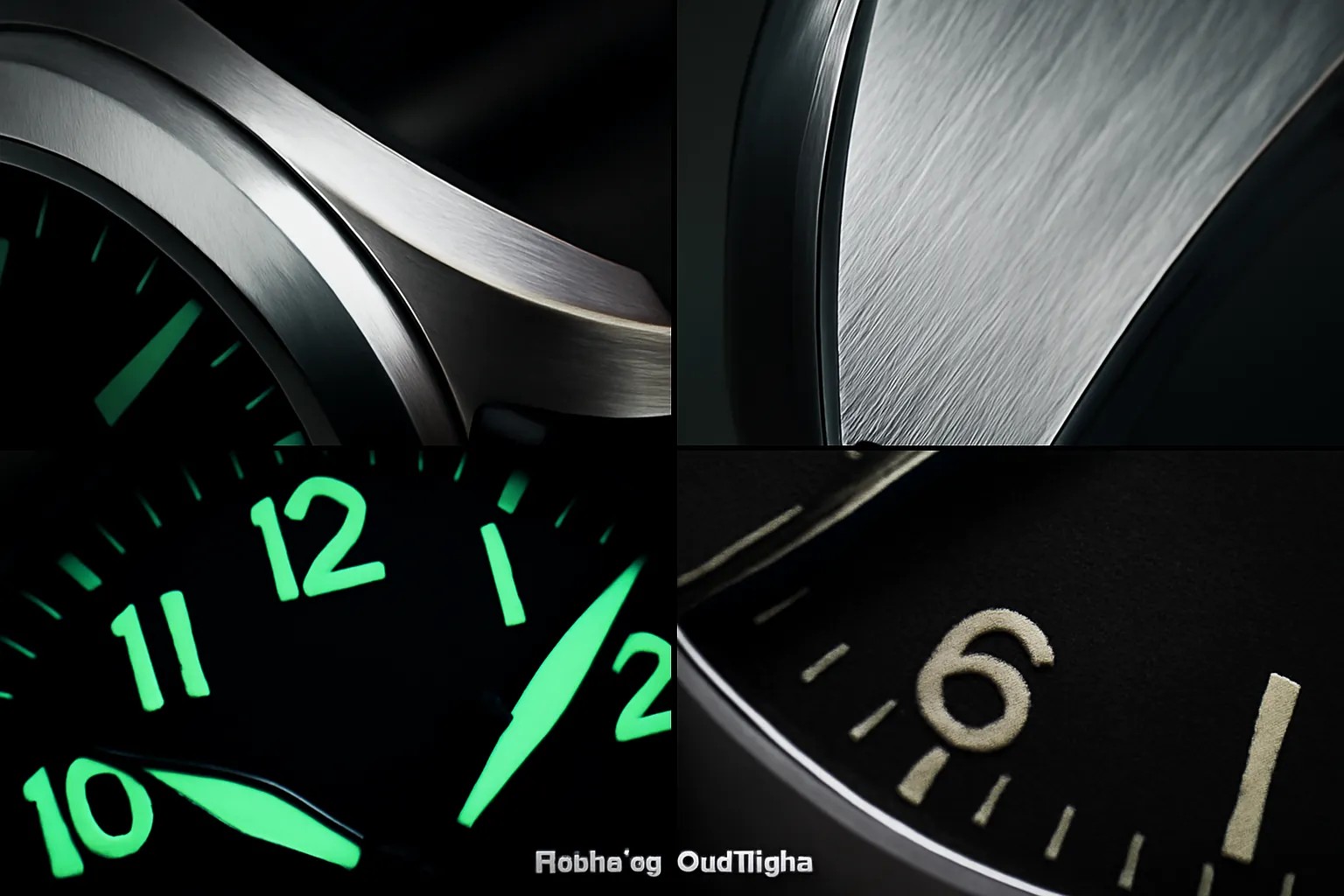
Finishing and light control play a subtle but crucial role
Well-designed edges should guide the eye smoothly along the case, not produce sharp mirror flashes that “cut” the view. Under neutral lighting (≈ 6500 K), brushed surfaces diffuse reflections evenly, while polished bevels add definition without glare.
This observation comes from internal macro-inspection tests performed across about twenty pilot-style samples between January and September 2025, using a consistent studio setup and neutral-light evaluation team (10 technicians).
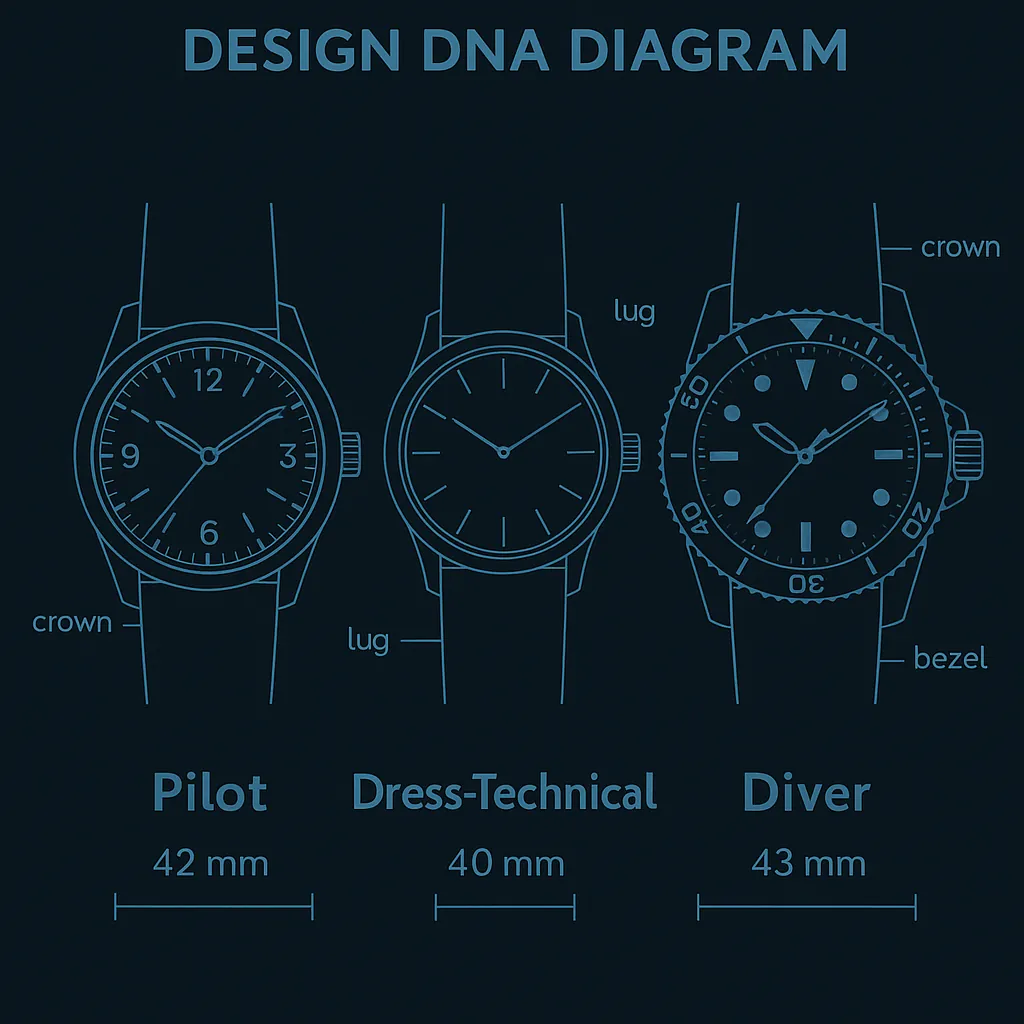
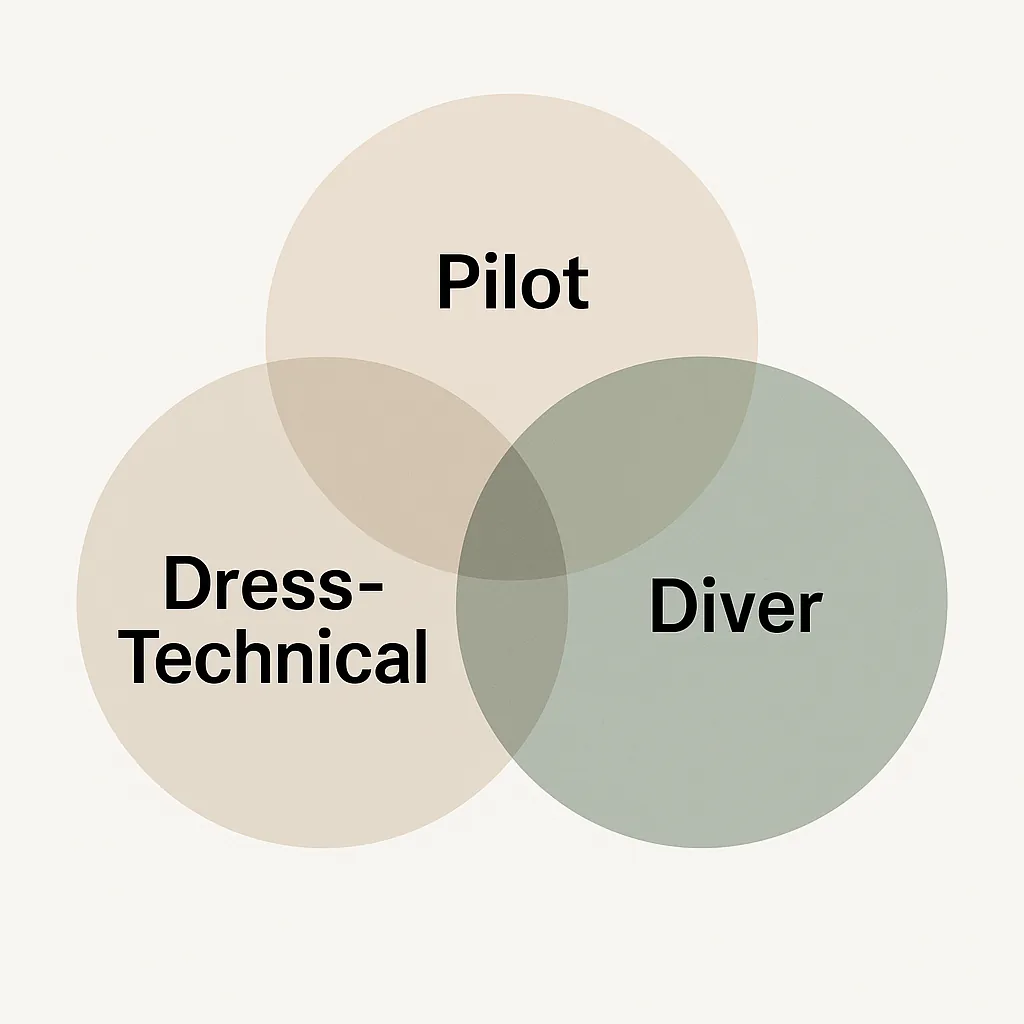
Style Map: Instrumental, Dress-Technical, Diver-Sport
- Instrumental Pilot — matte dials, bead-blasted cases, oversized crown for tactile control.
- Dress-Technical — marine-inspired clarity, refined case polishing, suit-ready posture.
- Diver-Sport — sealed engineering, grippy bezels, lumed indices for casual week-end wear.
Each overlap in the Style Map highlights how heritage tool-watch codes blend with modern lifestyle cues — for example, a Pilot-Diver hybrid often pairs bead-blasted cases with higher water resistance, while Dress-Technical crossovers refine legibility for office wear without losing instrument DNA.
Industry data from the Federation of the Swiss Watch Industry (FHS, 2024–2025) suggests that pilot-inspired daily watches make up roughly 30% of mid-tier analogue exports — reflecting the ongoing crossover between tool and lifestyle segments.(Based on: Horlogerie mondiale 2024; Swiss Watch Exports, Jan 2025)
When comparing styles, start from your environment: Instrumental for everyday utility, Dress-Technical for versatility, or Diver-Sport if durability under pressure defines your lifestyle.
Database Snapshot: Case, Movement, Bracelets
1) Case Architecture Matrix
Materials: steel / titanium / ceramic. Caseback: solid (tool) vs exhibition (dress-technical). Finishing: linear brushing to tame reflections; polished bevels for visual tempo.
Why it matters: mass, heat transfer, and light control shape comfort and perceived quality.
2) Movement Behavior Notes
Common calibers: Miyota 9-series, Seiko NH35, Sellita SW200. Typical specs: SW200-1 ~28,800 bph, ~38 h; NH35 ~21,600 bph, ~41 h; Miyota 90xx ~28,800 bph, ~42 h.
In practice, well-regulated samples often land around ±5–15 s/day; factory tolerances are generally broader, often falling within a modest range that allows for natural variation between samples(source).
Movement Behavior Chart
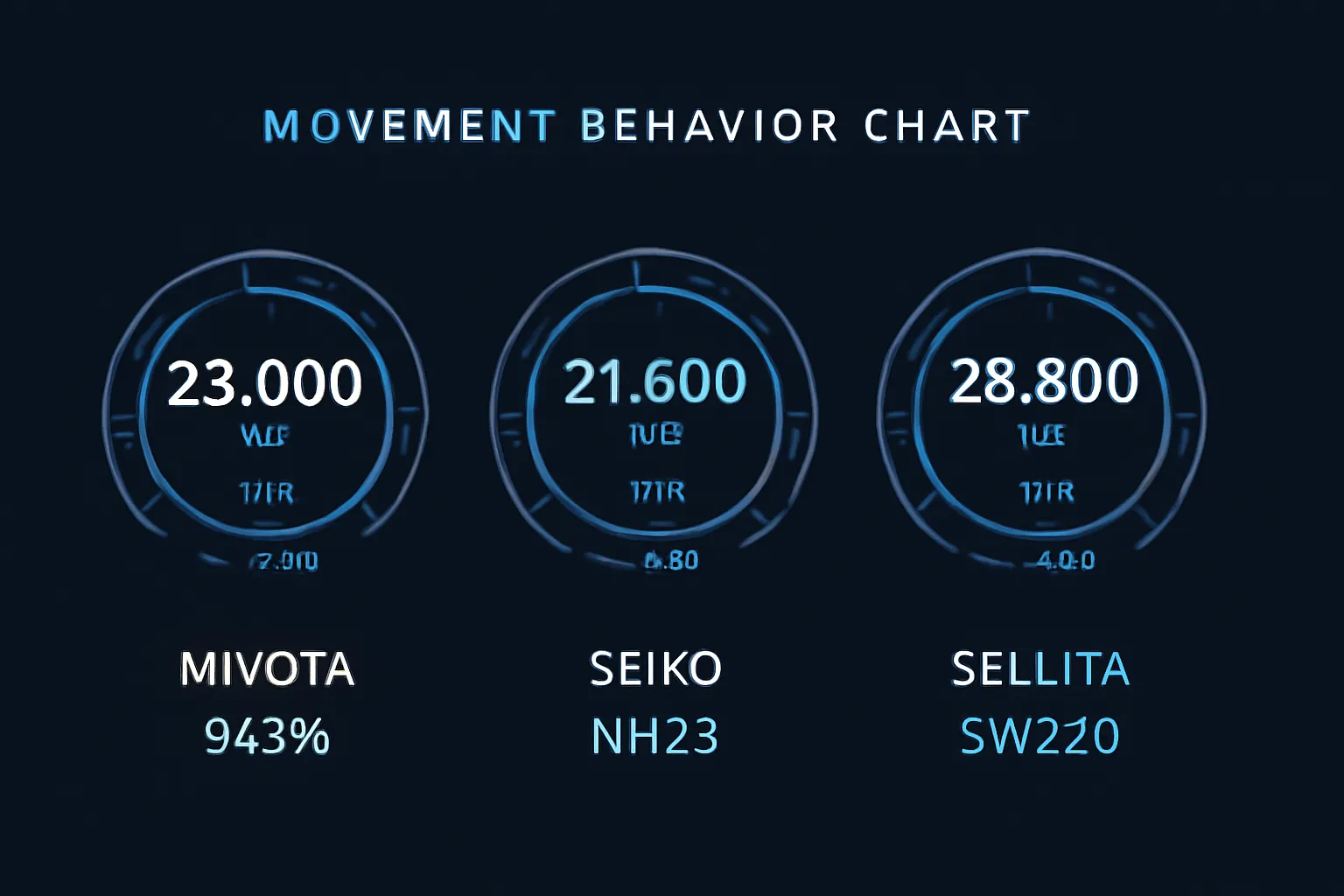
Miyota 9xxx: 21,600 bph · ~42 h · ±5–15 s/day;
NH35: 21,600 bph · ~41 h · ±5–15 s/day;
SW200-1: 28,800 bph · ~38 h · ±5–15 s/day.
3) Bracelet/Strap Ergonomics
Leather (supple break-in), canvas/NATO (breathable security), rubber (sport-centric). Clasps: pin buckle (fine micro-fit), milled deployant (even pressure), on-the-fly micro-adjust (seasonal comfort).
| Material / Type | Flexibility (1–5) | Breathability | Water Suitability | Typical Use |
|---|---|---|---|---|
| Leather | 4 | ●●○ | ✖ | Office / Dress |
| Canvas / NATO | 3 | ●●● | △ | Field / Casual |
| Rubber | 5 | ●○○ | ✔✔ | Sport / Outdoor |
Bench Tests: Materials & Craft Practice
- Water-resistance protocols: testing at the stated depth/time margin; diver-spec models follow ISO 6425 requirements for ≥100 m with legible timing systems in darkness (source)
- Crystal & coatings: synthetic sapphire (≈Mohs 9) resists scratching better than mineral; AR layers may mark sooner than the substrate; double-sided AR improves clarity under office LEDs and midday sun.
- Case coatings: PVD/DLC for darker aesthetics and abrasion resistance; consistency of deposition matters more than hue.
This structured approach aligns with UNESCO’s recognition of mechanical watchmaking craftsmanship as an intangible cultural practice—precision as culture, not branding(source).
Finishing & Tactile Experience
Feel the lug: linear brushing should register as fine satin, not coarse grain. Under raking light, bevels create a soft ribbon of reflection that guides the eye without flare. Lume must glow evenly across numerals and hands; printing should reveal depth and crisp edges, not haloing. Curved lugs and articulate links let the watch move with the wrist, making the motion feel naturally balanced and comfortable during daily wear.
Value Density & Configuration Strategy
A practical way to compare lawful homages is to map feature-to-experience rather than chase spec lists:
| Tier | Typical calibers | Case/Finish | Lume | Wearer takeaway |
|---|---|---|---|---|
| Entry Tool | Miyota 8-series | Uniform brushing | C1/BG | Honest utility, easy upkeep |
| Core Daily | NH35 / SW200 | Mixed brush+polish | BGW9 | Smoother sweep, stable accuracy |
| Enthusiast | SW300 / STP1-11 | Multi-axis brushing, crisp bevels | X1 grade | Refined tactility, night readability |
Analog craft remains the market’s backbone—over 90% share for analog segments in 2024(source).
How to Choose Your IWC replica
1) Wrist size & geometry
- ≤ 17 cm: 38–40 mm; short lug-to-lug, curved endlinks.
- 17–19 cm: 41–42 mm; neutral stance, sleeve-friendly.
- ≥ 19 cm: 43 mm+; balance mass to avoid crown bite.
2) Movement & upkeep
Automatics bring sweep and character; quartz favors set-and-forget reliability. For automatics, ~40–50 h reserve covers a workday plus evening rotation.
3) Use-case fit
- Commuter: matte dials, double-coat AR.
- Office formal: polished accents, tapered leather.
- Active casual: 100 m rating, robust crown tubes; diver cues per ISO 6425 for water days (source).
Design Language: From Cockpit to Boardroom
- Numerals: open apertures for instant read; consistent minute hashes to avoid visual drag.
- Hands: pencil/syringe shapes for sharp alignment; robust lume plots protect legibility.
- Bezel & crown tactility: coherent knurling supports repeatable torque and glove control.
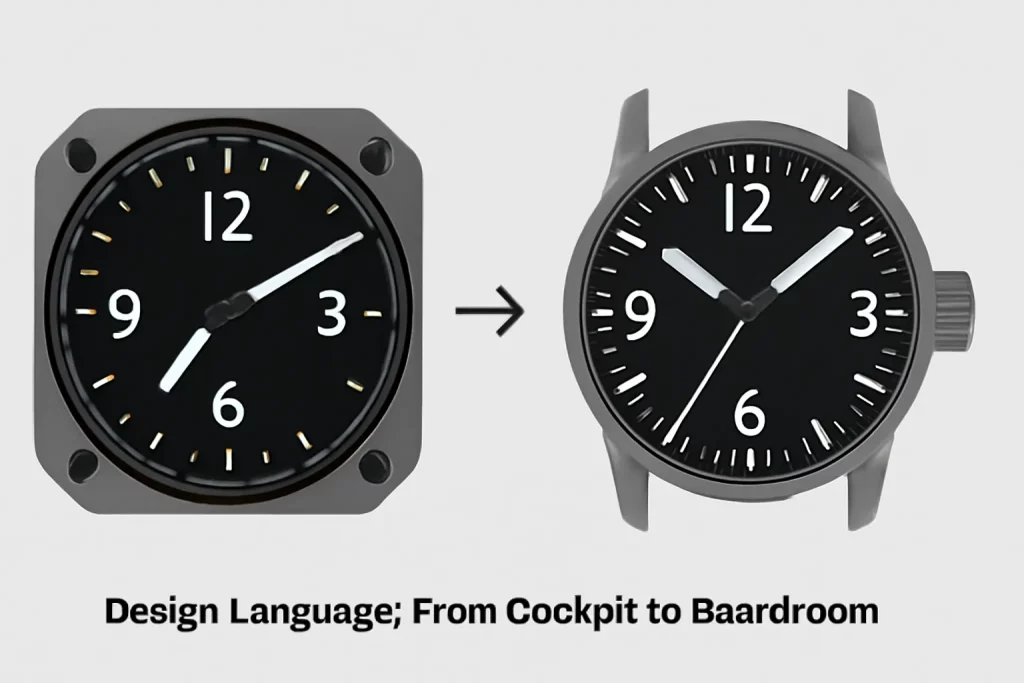
This illustration demonstrates the transition from cockpit instrument typography to modern watch dial design. The open numerals and bold hands in cockpit instruments evolve into sleek, minimalistic typography with clear, legible digits and refined watch hands for optimal readability.
FAQ — Practical Ownership
Q1: Why does AR coating sometimes look bluish?
Because dual-layer AR shifts certain wavelengths; the tint signals higher clarity under mixed lighting.
Q2: Is water resistance permanent?
No. Gaskets age; periodic testing is a best practice, echoed by independent chronometry protocols (e.g., water resistance and power-reserve checks within broader certification regimes)(source).
Q3: Strap swap tips?
Most 20–22 mm lug widths accept quick-release spring bars; ensure endlink curvature matches your case to avoid gap shadows.
Q4: Recommended service interval?
Typically every 3–5 years (brand-dependent); align with manufacturer guidance. METAS-certified models follow the maker’s maintenance policy.
For additional general watch care information, see the FAQ resource.
Summary — Confidence in Selection
It is not about status when choosing an IWC replica but about how the design and wrist feel fit your lifestyle and rhythm. Proportions that balance the dial, finishes that control light reflections, and a regulation target-like ±5-10 s/day you can verify by a week-long wear test-all components enable this feeling of confidence and accuracy.
In horology’s language, authority is a process (source).
When making your selection, consider ergonomics and try on the watch. Pay attention to the feel of the strap, how the dial appears under different lighting, and the crown’s ease of adjustment. Let the watch’s quiet clarity guide your decision.
Collectors often note how dial clarity affects daily focus and mood.