
Vacheron Constantin
Guide to Vacheron Constantin Replica Design, Materials and Wearing Experience
• Author: Daniel Chen
• Final Reviewer: Sarah Lin
Understanding Vacheron Constantin Replica in Today’s Luxury Watch Landscape
The Vacheron Constantin replica holds pride of place within the high-end segment of replicas, one that captures the classic Geneva design language in case lines taut yet effective, thoughtful proportions, and overall balance in complications, without drifting into origin or market-positioning comparisons. This review is targeted at what is most important to collectors and design-oriented enthusiasts: structure, materials, finishing, wearing experience, and satisfaction over time.
In recent years, traditional mechanical watches have maintained impressive resilience among collectors and new buyers. Independent industry reviews note that the luxury watch field continues to attract enthusiasts who value design longevity, tactile interaction, and craftsmanship over fast-moving trends.[1] Within this wider context, categories such as a Vacheron Constantin luxury copy or Swiss Vacheron Constantin clone watch appear to be gaining interest, with many enthusiasts responding to recognisable aesthetic codes and long-term design coherence rather than chasing quick novelty, based on publicly available market commentary and observed search behaviour.
The value proposition of this category is not simply about echoing prestige; it is about translating a well-loved design philosophy into an accessible, mechanically enjoyable format. When finishing is coherent, movement behaviour stable (for example, remaining within a broadly predictable daily deviation band over several weeks), and proportions well judged, the resulting watch feels like a serious, long-term addition to one’s rotation.
Design DNA and Style Positioning of Vacheron-Inspired Pieces
A Vacheron-style case is defined by its restraint: slim or moderately tall profiles; curved, stepped lugs; and smooth light transitions across brushed and polished surfaces.
Feature
Slim profiles often pair with softly stepped lugs and a narrow bezel. In many current Vacheron-inspired references, dress-focused cases commonly sit around 9–10 mm in thickness, while more complication-driven designs may climb into the 10.5–11.5 mm range, depending on movement height and caseback shape.
Interpretation
This geometry lets the case visually “flow” onto the wrist instead of sitting upright. When thickness, mid-case height and caseback curvature are balanced, the watch occupies less visual volume than its raw dimensions suggest.
Benefit
The result is a watch that disappears tidily under a cuff yet still feels visually substantial when seen from an angle. For most office and city wear, a measured thickness of under approximately 11 mm usually feels refined enough to slide under standard shirt cuffs while still retaining presence.
Dial execution plays an equally important role. Dress-oriented references lean toward three-hand simplicity with baton indices, while more expressive pieces—such as a high-grade Vacheron Constantin chronograph imitation—introduce registers, scales, or calendar windows. The shift from minimalism to complexity changes not just readability but personality: a minimal dial feels introspective and quiet; a complication dial feels active and story-driven.
When building a collection, a noticeable segment of enthusiasts will often complement a sportier piece—such as the rolex submariner 116610 replica—with a Vacheron Constantin replica as their “formal-leaning” or “city-leaning” counterpart, especially if they want clearer separation between work and leisure pieces and prefer a slimmer, more cuff-friendly profile for office hours, based on anecdotal collector feedback.
Style & Scenario Matrix for Vacheron-Inspired Pieces
To make the Vacheron Constantin replica category easier to navigate, the table below links three core usage scenarios—city, business and evening wear—to indicative case sizes and strap types. These bands are experience-based guidelines rather than strict rules, but they provide a practical starting point when you are shortlisting configurations.
| Scenario | Typical Wearing Context | Suggested Case Size Range | Preferred Strap / Bracelet Types |
|---|---|---|---|
| City | Daily commuting, casual meetings, coffee shops and weekend errands where comfort and versatility matter more than formality. |
36–38 mm for smaller wrists, 38–40 mm for medium wrists. |
Tapered leather straps for lightness and comfort, or slim multi-link bracelets for added robustness. |
| Business | Office environments, client meetings and conferences where a watch should look deliberate but not distracting under a shirt cuff. |
36–38 mm for classic dress profiles, 38–40 mm for a more contemporary presence. |
Alligator- or calf-style leather straps for maximum cuff compatibility, or refined steel bracelets with gentle taper for mixed office / travel use. |
| Evening | Dinners, events and more dressed-up occasions where the watch can play a slightly more expressive role without overpowering the outfit. |
36–39 mm for discreet elegance, 39–41 mm when a little extra dial presence is desired. |
Glossy leather straps in darker tones for a clean, elevated look, or slim, polished bracelets when you want more light play on the wrist. |
All size and strap recommendations are indicative and based on typical wearing patterns; actual comfort and visual balance may vary between individual wrists and specific case designs.
Core Configurations Across the Vacheron Constantin Replica Catalog
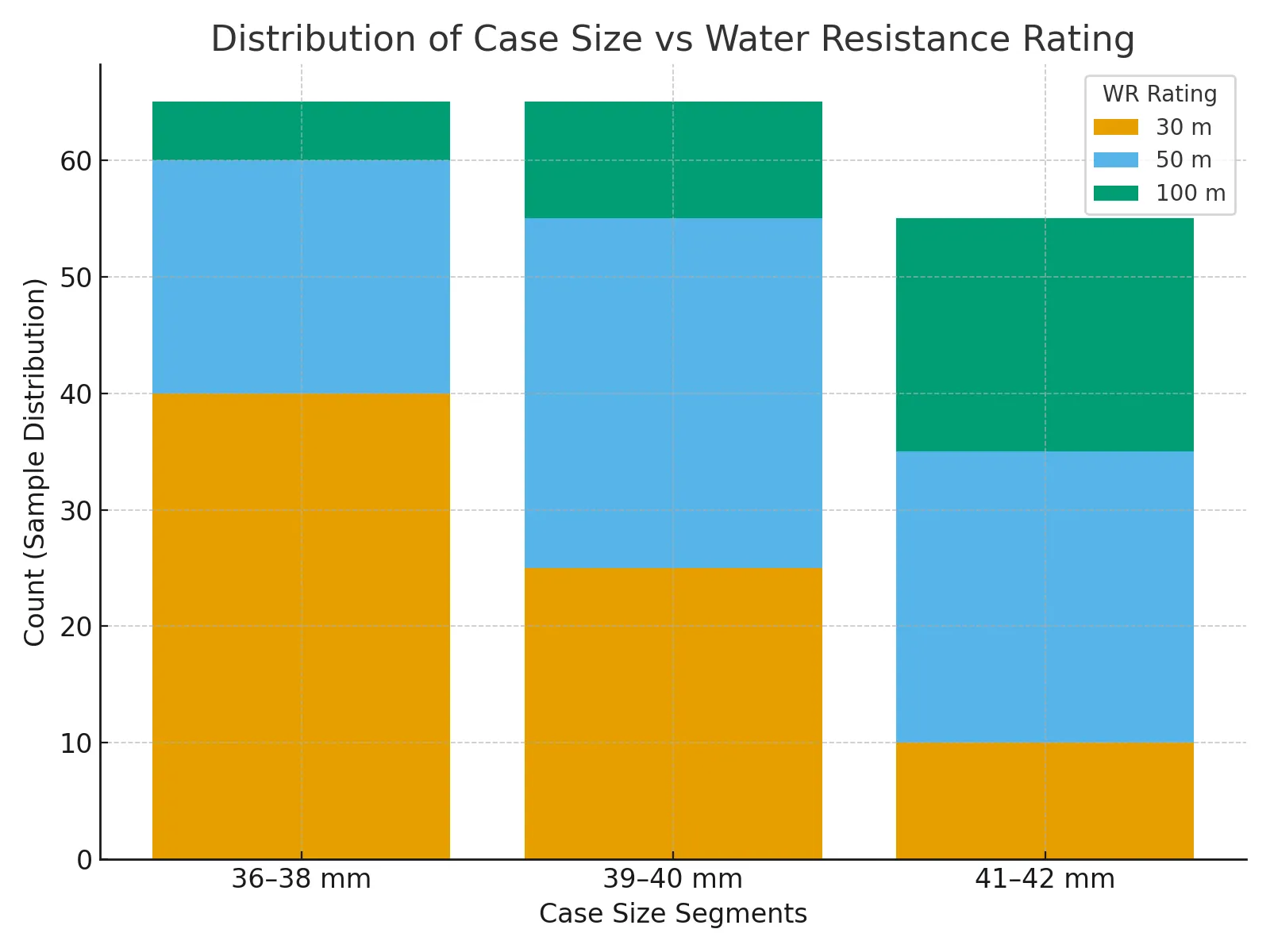
Even within the same design family, configuration patterns emerge across case, strap, movement, and water-resistance choices.
Case Size & Proportions
| Aspect | Typical Range | Wearing Effect | Notes |
|---|---|---|---|
| Case Diameter | 36–38 mm (dress) 40–41 mm (business/light complications) |
Sets the broad visual footprint | Two main clusters dominate current Vacheron-style designs |
| Lug-to-Lug | 45–46 mm (compact) 49–50 mm (more presence) |
Determines how wide the watch sits | 38 mm + 46 mm L2L can wear smaller than 40 mm + 50 mm L2L |
| Geometry Interaction | Curved lugs: ~47–48 mm Straight lugs: up to ~50 mm |
Controls comfort and “overhang” | Short curved lugs often wear smaller than raw diameter suggests |
| Fit Rule of Thumb | L2L ≤ wrist width | More centred, natural fit | Quick method for first-time buyers |
| Weight | 60–75 g (leather) 110–140 g (steel) |
Influences presence and daily comfort | Ranges vary with bracelet thickness & case profile |
Bracelets, Straps & Clasp Design
Leather emphasises formality and visual lightness. Multi-link steel adds structure and distributes weight evenly. Rubber appears occasionally on sport-leaning designs, especially on bolder interpretations.
Folding clasps preserve strap life and keep the underside of the wrist clean—important for office wear. From a construction perspective, screw-fixed bracelet links tend to be easier for fine sizing than friction pins, and smoother clasp edges reduce pressure points during keyboard work.
Movement Tiers
Movements typically fall into three broad bands in this category, with behaviour ranges below used as indicative, experience-based guidance rather than strict guarantees:
- Standard automatic:often regulated to a broad daily deviation band (for example, around ±20–30 seconds per day in normal use), with power reserve typically in the 38–42 hour region.
- Improved clone:usually shows tighter regulation and a smoother winding feel, with observed deviations more commonly in the ±10–20 seconds per day bracket when worn consistently, and power reserves frequently extending to around 40–50 hours.
- Higher-grade “Super Clone”:aims for tighter daily deviation (for example, approximately ±5–10 seconds per day under stable routines), more consistent amplitude and refined rotor sound; power reserve may sit in the 40–60 hour range depending on architecture.
These are approximate figures and based on normal behavior patterns rather than laboratory testing. It is not about chronometer-level precision in every single case; it is about predictability, which is what collectors count on for daily confidence. When a watch drifts in a steady, repeatable way, it becomes easier to live with than a piece that is theoretically accurate but inconsistent in real use.
Water-Resistance Behaviour
Specifications like “life waterproof”, 30 m, or 100 m describe different expectations. In many Vacheron-inspired dress pieces, nominal ratings around 30 m are common; more contemporary, sport-influenced interpretations may move to 50 m or occasionally 100 m, especially when screw-down crowns and reinforced caseback gaskets are used.
Official dive-watch standards rely on strict depth and condensation tests and are generally calibrated for original, purpose-built sports models rather than this dress-leaning category. Here, the practical aim is everyday resilience such as rain, hand-washing and busy commutes—not aquatic sports or prolonged immersion.[1] When in doubt, treating any dress-oriented Vacheron Constantin replica as “splash-resistant plus” and reserving serious water contact for a dedicated sport watch is a conservative, collector-friendly approach. These descriptions are indicative only and do not replace manufacturer testing or official certification.
Materials, Finishing & Craftsmanship Signals
Structure and surface work define much of the emotional experience on the wrist.
Case Metal & Surface Work
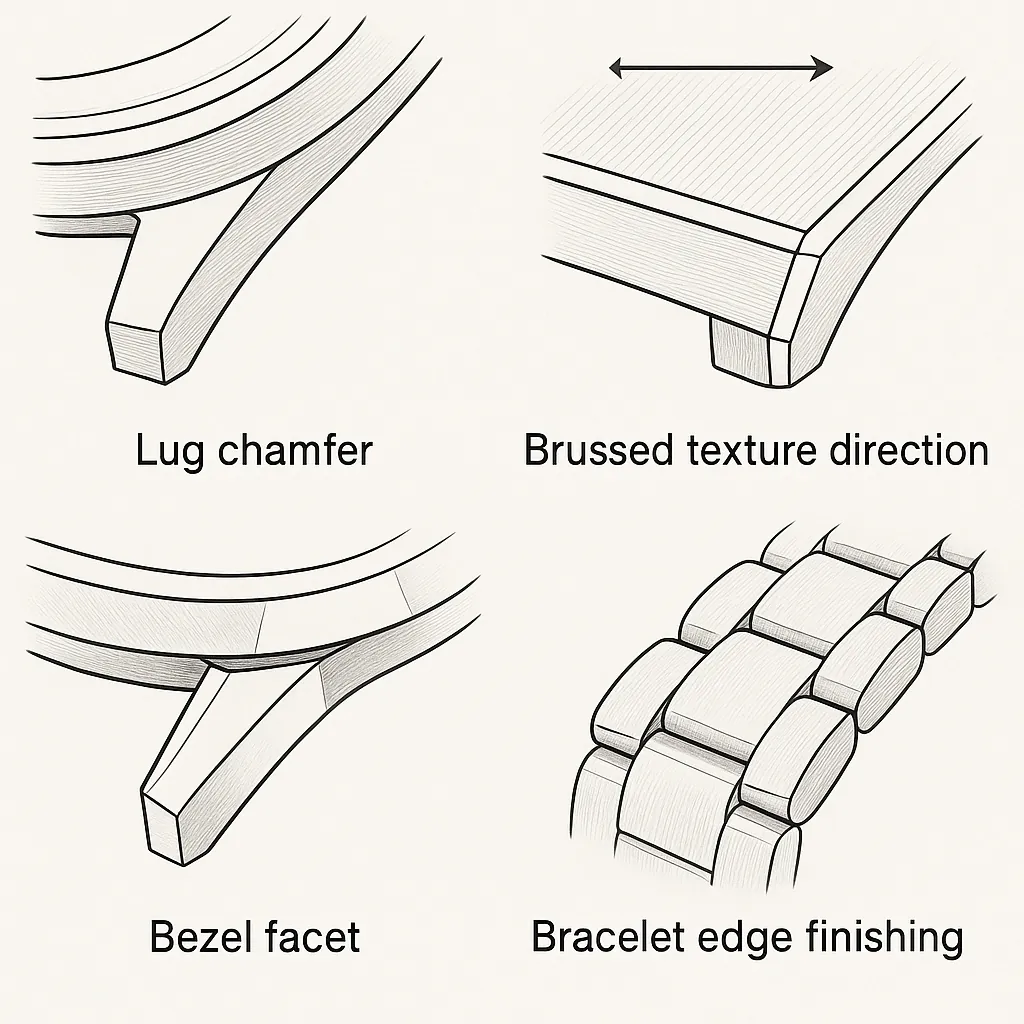
Higher grades of steels and gold-tone treatments are chosen here for their resistance to wear and their ability to hold crisp transitions–brushed flanks, polished bezels, and bevelled lug edges. For this segment, the usage of 316L stainless steel is widespread owing to its corrosion resistance and balanced hardness; in higher-spec interpretations, steels closer to the 904L-type characteristics may be referred to for increased brightness and a slightly different tactile feel.
- What: Precise boundaries between brushed and polished surfaces, with bevels that remain straight and even when viewed under magnification.
- Why it matters: Crisp transitions indicate accurate machining and controlled finishing. Rounded, fuzzy transitions or uneven brushing often suggest shorter finishing time or less consistent tooling.
- Then what: When inspecting macro photos, look for straight grain in brushed areas and clean, mirror-like planes in polished sections without visible waviness.
- So what: On the wrist, the watch reflects light cleanly rather than scattering it unpredictably, which contributes to a more expensive visual impression.
Coatings & Colour Stability
Gold-tone and darker finishes in this category are commonly achieved using PVD-style or IP coatings. Typical coating thickness values in mainstream applications sit in the low single-digit micron range; while these are not indestructible, they can offer respectable resistance to colour change when contact with abrasive surfaces is minimised. Edges of clasps and high-contact bracelet links are often the first areas where long-term wear will become visible.
Crystal & Edge Quality
Sapphire and premium sapphire-style crystals resist scratches and stay optically clear. Anti-reflective treatments on one or both sides help dial details remain legible in mixed lighting, especially on dark or sunburst dials. When gasket seats and casebacks are cut with even tolerances, water-resistance ratings align better with daily needs and reduce the likelihood of condensation after temperature swings.
How to Choose the Right Vacheron Constantin Replica for Your Wrist & Routine
Fit Framework:Diameter × Lug-to-Lug × Thickness
| Wrist Type | Recommended Lug-to-Lug | Thickness Behavior | Typical Case Size Range | Fit Notes |
|---|---|---|---|---|
| Flatter wrists | Longer curved lugs often sit well | Moderate thickness helps the case hug the wrist | Varies by style, usually 38–40 mm | The curvature keeps the watch from “perching” on top of the wrist. |
| Rounder wrists | Compact lug spans (e.g., under ~48 mm for most medium wrists) |
Slightly more thickness creates visual centring | 38–41 mm depending on dial layout | Shorter lugs prevent overhang and keep the watch sitting balanced. |
| Smaller wrists | Short lugs, ideally under ~46 mm L2L |
Restrained thickness for better settling | 36–38 mm preferred by many in this group | These proportions help the watch “sink in” instead of floating above the wrist. |
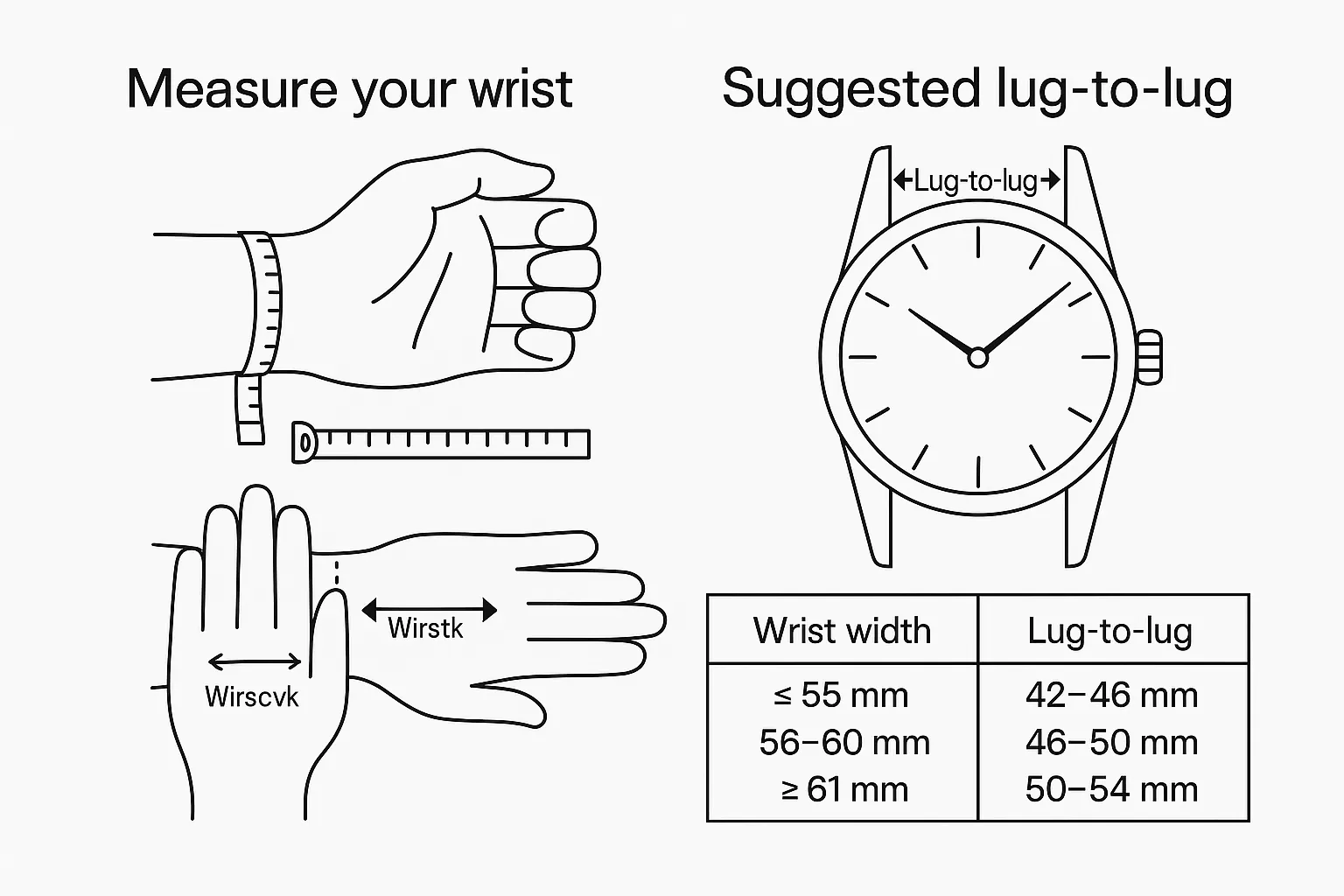
Choosing a comfortable watch is rarely about diameter alone. How the case spans the wrist – lug-to-lug – along with how the mid-case and caseback handle thickness, usually decide whether a watch feels settled or awkward. The table above groups common wrist shapes with the geometries which tend to work best for each.
One easy, pragmatic step is to measure your wrist flat across the top and treat that span as a soft upper limit for lug-to-lug. Pieces that stay within that envelope are more likely to feel balanced in daily use.
Complication & Dial Layout Selection
Minimal dials create a calm presence and are easier to pair with formal tailoring. Calendars and moonphases add emotional storytelling and a sense of daily interaction. Chronograph-style layouts add energy and visual complexity.
For many buyers approaching this category for the first time, a Vacheron Constantin precision clone with a restrained dial—three hands with or without date—acts as the most versatile baseline: it is straightforward to read, easier to dress up or down and generally introduces fewer thickness and weight penalties than heavily layered dials.
Movement Choice Based on Routine
For occasional rotation use (for example, a few days per month), a standard automatic with broader daily deviation is usually acceptable, as the watch is more about the wearing experience on those specific days. For daily wear, a movement that maintains a stable behaviour pattern—such as remaining within an observed, repeatable band over several weeks—is more satisfying than one that occasionally achieves spectacular accuracy but varies widely from day to day.
If you depend on the watch for time-critical tasks, targeting improved clone or higher-grade super clone tiers with more consistent regulation and stronger amplitude stability is a pragmatic approach. If your use is more aesthetic and occasional, base-tier movements can still deliver a satisfying experience when the case, dial and bracelet are well executed.
All numerical ranges referenced in this guide are indicative, based on typical sample observations, and may vary between individual pieces; they do not constitute performance guarantees.
Common Misalignments & How to Avoid Them
1. Judging Only from Dial Photos
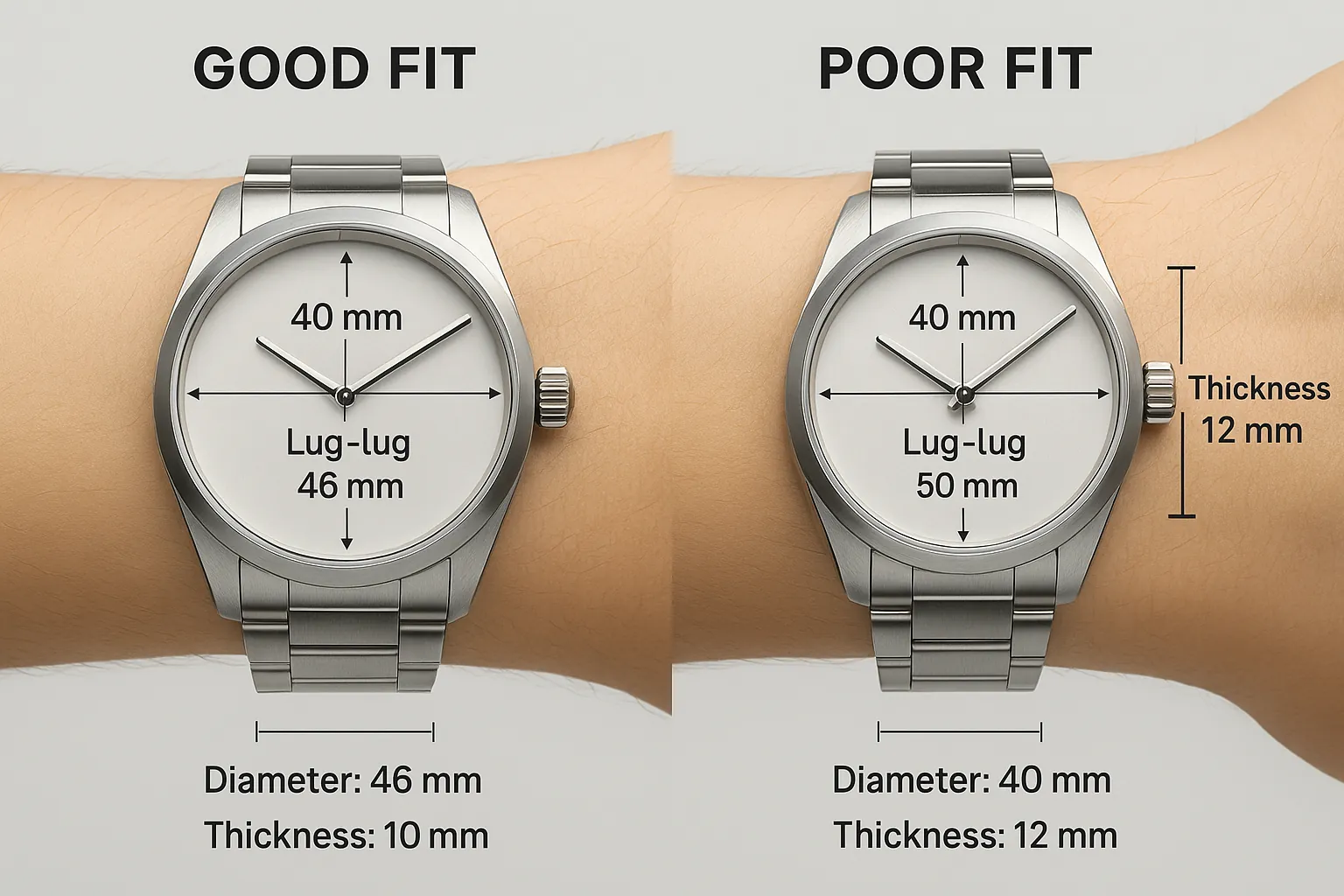
Front-on images hide key structural elements such as mid-case height, caseback build and lug geometry. This is one of the most common reasons collectors are surprised by extra bulk when a watch finally arrives, especially if the specification sheet does not clearly state lug-to-lug and thickness in addition to diameter.
2. Overlooking Bracelet Engineering
Even a beautifully finished case can feel wrong if the bracelet flares too quickly or the clasp edges are sharp. Owners coming from pieces such as a rolex day-date 118346 36mm replica often notice very quickly when bracelet articulation is less smooth, end-links sit too high, or clasp tolerances feel looser by comparison.
3. Misinterpreting “One Millimetre”
38 mm vs 40 mm can feel dramatically different depending on bezel width and lug shape. For many collectors, a size just under 40 mm often feels like a sweet spot for a Vacheron Constantin replica—modern but still cuff-friendly on most office shirts, especially when combined with modest thickness and a tapered bracelet or strap.
When in doubt between two sizes, considering wrist width and lug-to-lug distance alongside numerical diameter usually leads to more reliable choices than relying on diameter alone.
Configuration Value Density:Where Design Feels Most Balanced
Think of configuration options like a value ladder:
- Base level:standard automatic, simpler surface work—well suited to light rotation or initial exploration when budget and experimentation are the main priorities.
- Mid level:improved clone movement + refined finishing—often the long-term sweet spot, combining reliable behaviour with visibly upgraded details such as sharper brushing, cleaner indices and better dial printing.
- Upper level:higher-grade movement + elevated materials—ideal for building a stable, signature piece in a rotation that already covers sport and casual roles.
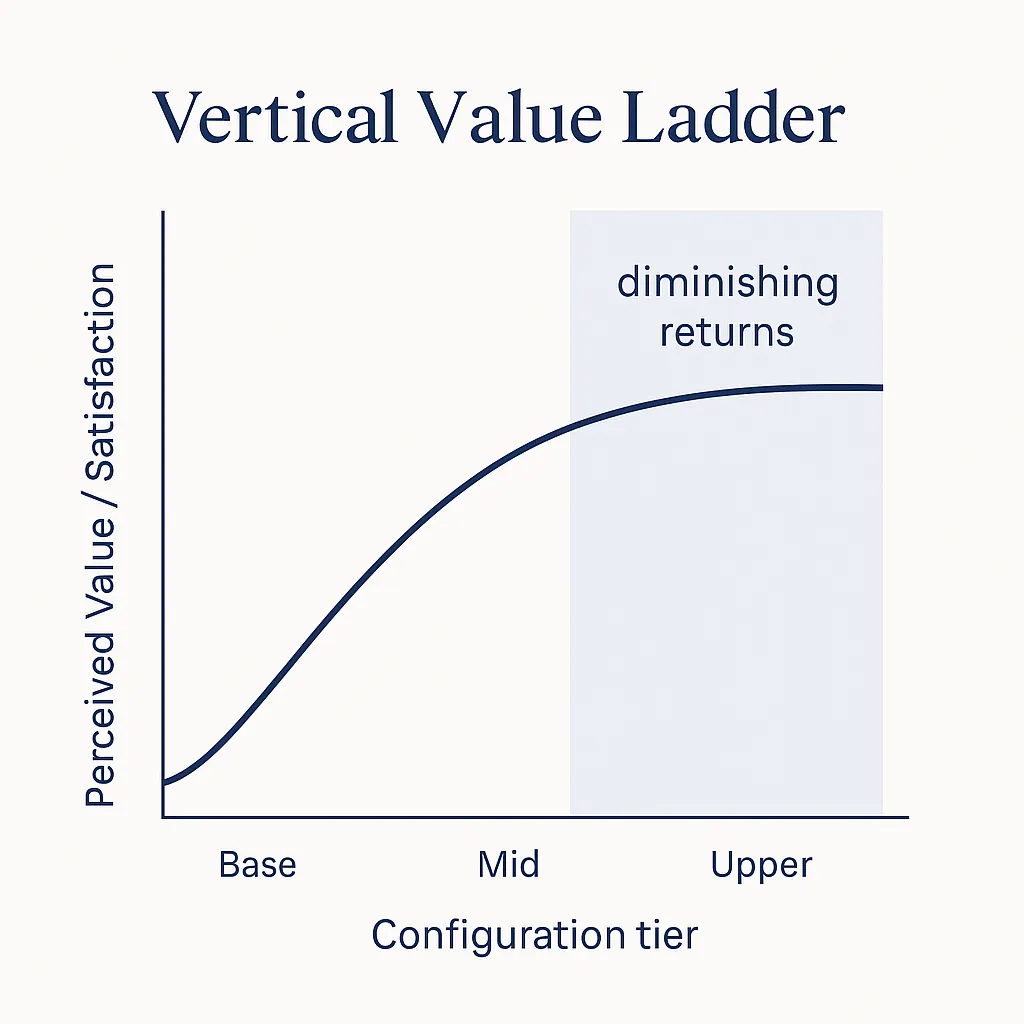
Among enthusiasts with diverse wardrobes, the mid level is often described as the most emotionally balanced: dependable accuracy, strong finishing coherence and a design that transitions cleanly between work and evening settings, according to informal feedback shared in enthusiast communities.
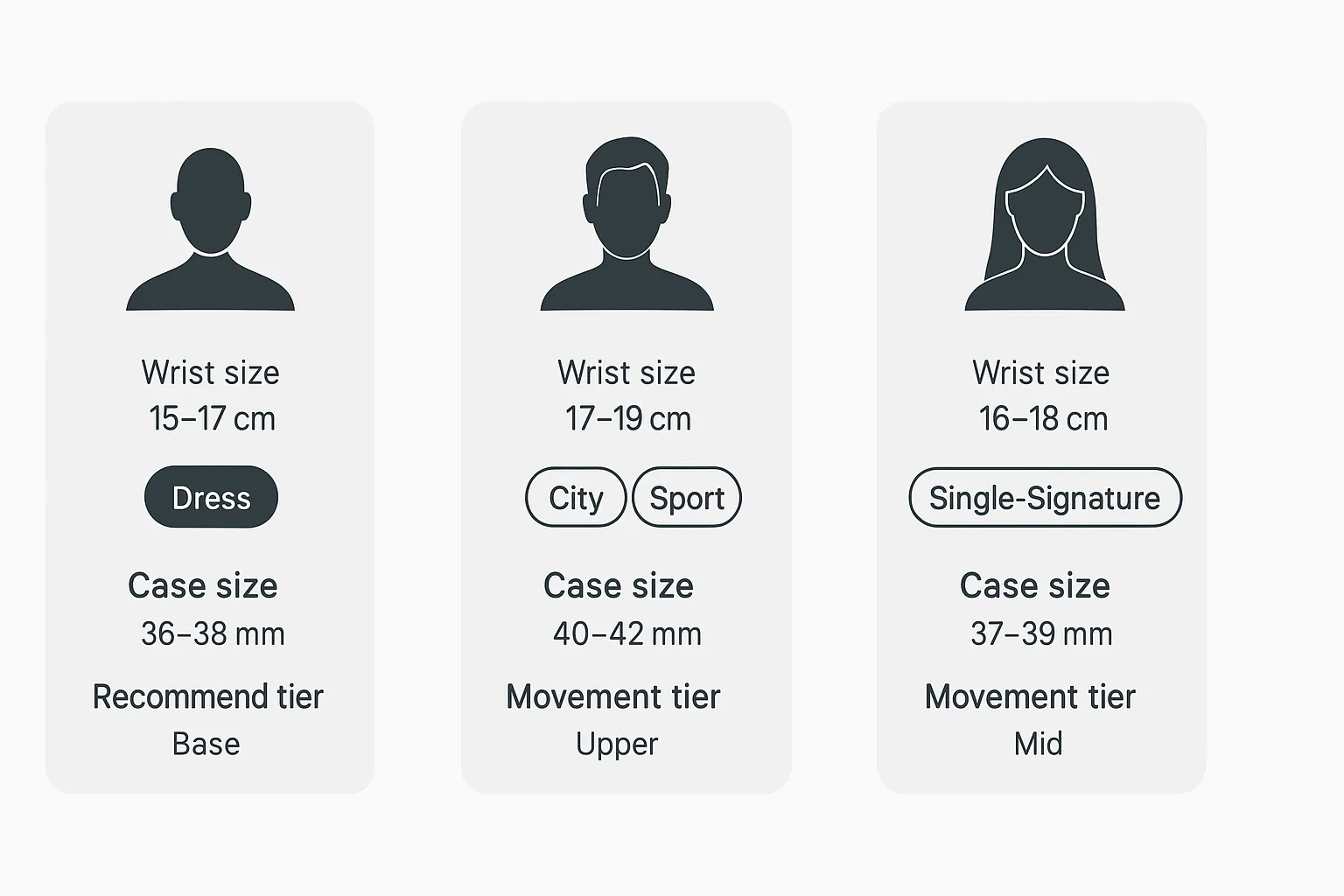
Who Each Vacheron Constantin Replica Style Really Suits
- Discreet Dress-Watch Wearer
Slim profiles, leather straps, minimal markers.
Uses the watch as a subtle daily signature that complements, rather than dominates, tailoring. - Complication Enthusiast
Enjoys calendars, sub-dials and more layered dials.
Often pairs this category with sportier families like Audemars Piguet replica or Patek Philippe replica for rotation variety, using the Vacheron-inspired piece as the more formal or poetic option in the set. - Single-Signature-Piece Collector
Wants a versatile “one-watch wardrobe.”
Chooses mid-size geometry and neutral metal tones, often aiming for a layout that feels equally at home with knitwear, shirting and semi-formal tailoring.
Vacheron Constantin Replica — Expert Answers on Design & Wear
Is it comfortable for all-day office wear?
Yes—provided the geometry matches your wrist. Prioritise moderate thickness (often under ~11 mm for shirt use), shorter or well-curved lugs and tapering bracelets or straps for seamless interaction with shirts and desk work. A small amount of end-link drop at the case usually helps the watch follow the wrist contour instead of sitting flat and rigid.
What accuracy is realistic?
Mechanical movements operate within daily deviation bands, and behaviour can vary with wearing pattern. For standard automatic tiers, seeing deviations around ±20–30 seconds per day is common; improved clone and higher-grade super clone configurations often narrow this to roughly ±5–20 seconds per day when worn consistently. Consistency over weeks is more meaningful than chasing improbably tight numbers in isolated tests.
How should I interpret water-resistance ratings?
Ratings in this category primarily describe everyday resilience, not aquatic sports. 30 m is usually best treated as “splash-resistant” for hand-washing and light rain; 50 m and 100 m give progressively more margin for incidental exposure but still do not turn a dress-leaning piece into a dedicated dive instrument. A companion sport model from another category may complement your wardrobe if you expect frequent swimming or water-based holidays.
What basic maintenance helps?
Gentle cleaning with a soft cloth, avoiding harsh chemicals and strong magnets, and occasional checks on crown, gaskets and bracelet screws keep seals and oils in healthier condition. If uncertain about terminology, a structured faq resource can help orient your understanding and provide a glossary of commonly used watch terms.
Bringing It Together:How to Use This Vacheron Constantin Replica Guide
Choosing a Vacheron Constantin replica is about aligning three main axes:
- Design language (case, dial and complication personality)
- Structural comfort (diameter, lug-to-lug, thickness, bracelet behaviour and total weight)
- Configuration tier (movement class, finishing quality, materials and expected daily deviation range)
As your taste evolves, you may explore adjacent design families within the broader world of Luxury replica watches—from integrated-bracelet sport pieces to minimalist dress references—to position your Vacheron-inspired model within a thoughtful rotation.
When structure, materials and wearing behaviour are considered together—and when expectations for movement accuracy, water resistance and finishing are set using realistic, experience-based ranges—the watch becomes not only aesthetically coherent but emotionally steady: something you return to naturally because it integrates cleanly with how you dress and move through daily life.
Authority Reference
[1] The contextual background in this page regarding Swiss watch export performance, chronometric certification standards, and global market demand draws primarily from the following publicly accessible industry sources: Federation of the Swiss Watch Industry (FH), “World Watchmaking Industry in 2024”; Federal Institute of Metrology (METAS), “Certification MASTER CHRONOMETER”; and Grand View Research, “Swiss Watch Market Size & Share Report 2033”.